Ancestral Stewards of the High Desert
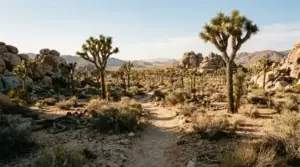
The human history of San Bernardino County spans over 10,000 years, with distinct tribal nations adapting to diverse microclimates across the region:
- The Serrano (Yuhaviatam): Historically inhabiting the San Bernardino Mountains and the northern High Desert plains, the Serrano (“mountain people”) relied on seasonal acorns, pine nuts, and small game while maintaining permanent village sites near natural mountain springs.
- The Chemehuevi (Nuwuvi): A branch of the Southern Paiute, the Chemehuevi masterfully navigated the hyper-arid eastern stretches of the Mojave Desert and the Colorado River basin, utilizing nomadic hunting and gathering strategies.
- The Mojave (Pipa Aha Macav): Known as the “People of the River,” the Mojave established extensive agricultural communities along the fertile banks of the Colorado River, trading widely across coastal and desert tribes.
- The Cahuilla (Iviatem): Controlling territory spanning the southern reaches of San Bernardino County down through the San Gorgonio Pass, the Cahuilla developed sophisticated water storage systems and environmental management practices.
For research and educational resources dedicated to preserving regional indigenous history, visit the official San Bernardino County Museum archive.
The Mojave Trail: Ancient Trade Arteries Across the Basin
One of the most remarkable achievements of the desert tribes was the creation of vast interregional trade networks. The most famous of these trails—the Mojave Trail (or Mojave Footpath)—spanned over 140 miles from the Colorado River straight across the desert interior to the coastal valleys of Southern California.
Indigenous runners and traders utilized this well-marked network to exchange essential commodities, such as sea shells and steatite from Catalina Island, piñon nuts from the mountains, mesquite beans from the desert lowlands, and red ochre pigment for ceremonial painting. Crucially, knowledge of the trail relied on a secret mental map of vital water sources—natural tinajas (rock basins), artesian springs, and underground aquifers along the Mojave River.
Centuries later, European explorers, mountain trappers, and American pioneer wagon trains relied directly on these ancient tribal pathways to cross the formidable Mojave Desert safely.
To learn more about protected tribal landscapes and historical trail conservation across public desert lands, explore information provided by the Mojave National Preserve Cultural Resource Program.
Sacred Petroglyphs and Pictographs: Etched in Rock
Perhaps the most visible and awe-inspiring connection to San Bernardino County’s ancient inhabitants lies etched onto dark basalt boulders and tucked inside granite rock shelters: petroglyphs and pictographs.
Distributed across sites like the Rodman Mountains, Inscription Canyon, and the Coso Range, these ancient rock art panels feature complex geometric patterns, anthropomorphic figures, sunbursts, and detailed depictions of desert bighorn sheep. While exact interpretations vary across cultural traditions, these sites held profound spiritual and practical significance:
Functions of Desert Rock Art:
- Sacred Ceremonial Markers: Designating sites used for spiritual vision quests, puberty rites, or seasonal solstice observances.
- Hunting and Astronomy Indicators: Mapping migratory game routes, star constellations, and water source directions.
- Tribal Boundaries and Lineage Records: Recording family lineages, historical events, and oral traditions for future generations.
Ethical Site Stewardship and Preservation Guidelines
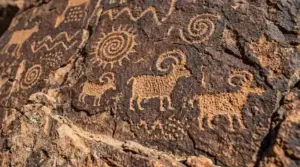 Because desert petroglyphs and ancestral sites sit on delicate, exposed public lands, they are highly vulnerable to environmental weathering, vandalism, and illegal removal. Visitors exploring historic tribal lands across San Bernardino County must practice strict Leave No Trace principles and site stewardship:
- Look, But Never Touch: Oils from human hands can cause rapid chemical degradation of natural rock patina and ancient pigments. Never touch or lean against rock art surfaces.
- Never Trace or Chalk: Applying chalk, water, or rubbings to petroglyphs permanently damages fragile rock surfaces. Use optical zoom lenses for photography instead.
- Keep Location Details Private: Avoid posting precise GPS coordinates or geotags on social media to protect sensitive sites from overcrowding and destruction.
- Respect Tribal Sovereignty: Many ancestral sites remain active places of prayer and ceremony for living tribal descendants. Treat all rock art and archaeological sites with deep reverence.
Conclusion
The ancient tribal pathways and rock art of San Bernardino County are far more than historical artifacts—they are living monuments to human endurance, ecological wisdom, and spiritual connection. By honoring the ancestral lands of the Serrano, Chemehuevi, Mojave, and Cahuilla peoples, modern visitors can gain a richer appreciation for the deep cultural heritage that continues to shape the Mojave Desert today.